Roofing and gutter work for a hillside city built almost entirely by plan, with tile roofs reaching underlayment age, association approvals, and wind off the Saddleback foothills.
Roofing & Gutters · Mission Viejo
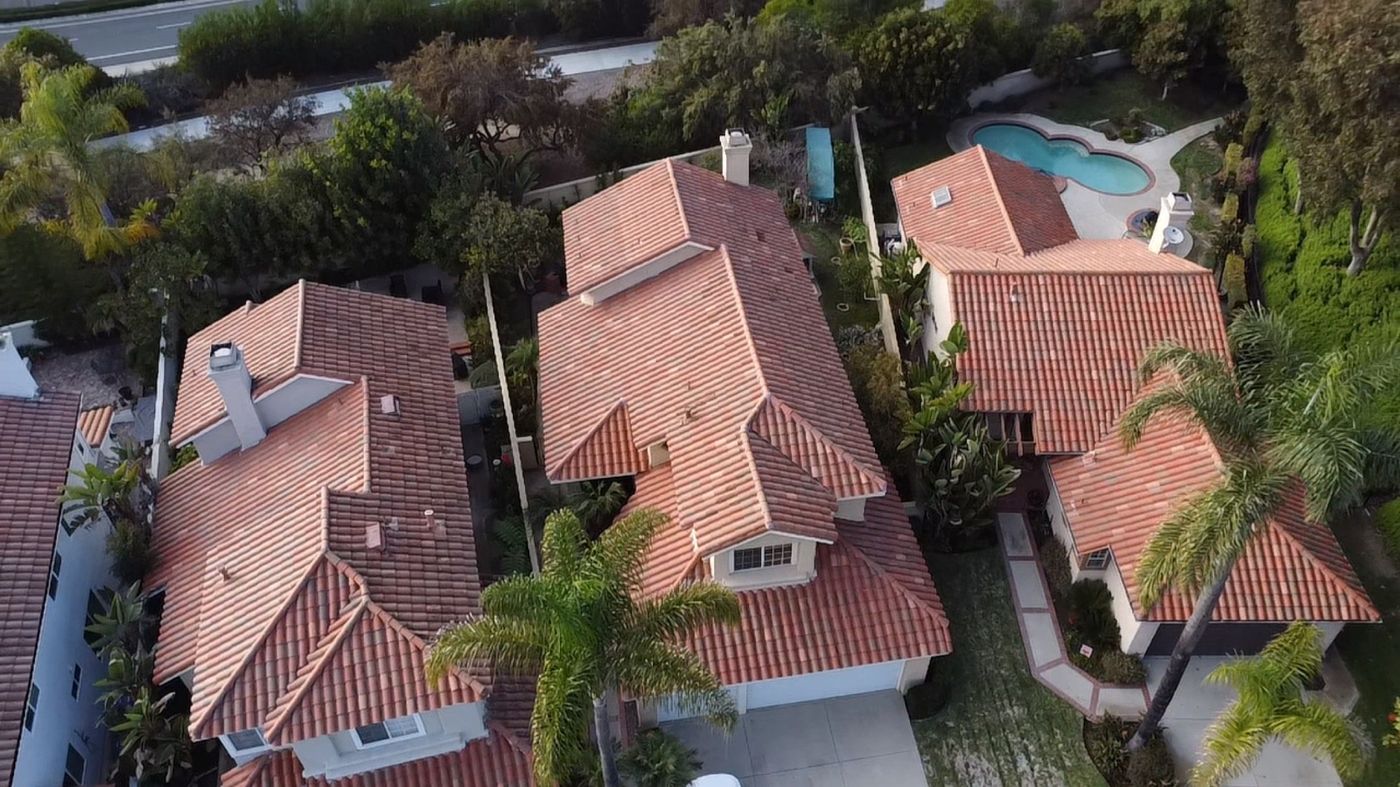
Mission Viejo was drawn on paper before it was built. Beginning in the mid 1960s, a single developer laid out the hills of the Saddleback Valley tract by tract, and the city grew steadily through the 1970s, 1980s, and 1990s. The result is a place where whole neighborhoods share an age, a style, and a roof. Spanish and Mediterranean architecture set the tone, so concrete and clay tile cover a large share of the city. In some of the older neighborhoods, homes started life with wood shake and have since been converted to lighter tile or composition shingle.
That shared age matters more than anything else. When every home on a street was roofed in the same year, they tend to need attention in the same few years, too. For much of Mission Viejo, that time is now. Tile from the 1980s and 1990s is usually still sound, but the single layer of felt that was common underneath it was never meant to last as long as the tile. Leaks tend to start small, at a valley, around a skylight or chimney, or along the eaves, and they often show up only in the heaviest, most wind-driven rain. If a neighbor has just had their roof lifted and relaid, yours is probably the same age.
The terrain adds its own wear. Mission Viejo is hills, slopes, and cul-de-sacs, set inland where summer runs hot and dry. Homes on ridgelines take the full force of Santa Ana winds coming down from the foothills, which slide loose tile, crack the mortar at the ridges, and drive rain sideways under worn flashing. Sun exposure is uneven on a hillside lot, so the south and west slopes of a roof can age years ahead of the others. Homes near open space on the city's edges may also sit inside mapped fire hazard severity zones, where vents, gutters, and roof edges matter as much as the tile itself.
Because so many homes share a floor plan, the weak points repeat, and that works in your favor. We look closely at the dead valleys where two roof planes meet a wall, at the flashing behind chimneys, at the bird stops along the eaves, and at the gutters on long downhill runs. The free inspection documents all of it with photos, and the written scope tells you plainly whether you need a repair, a lift and relay of your existing tile, or a full replacement. Our guide to tile roof underlayment explains the whole subject if you want to read ahead.
Tile is the main event here, and we plan every job around the association calendar and the rainy season.
Concrete and clay tile, architectural shingle, and metal systems in profiles and colors chosen to pass design review.
Your tile comes off, new underlayment, battens, and flashings go on, and the same tile goes back, with matching pieces for any that break.
Slipped tile, ridge mortar, and flashing leaks repaired, starting with a free, photo-documented inspection.
Gutters and downspouts laid out for hillside lots, so water leaves the roof and moves away from the slope.
Most of the city falls into one of four situations. Knowing which one you have is half the decision.
The most common roof in the city. The tile usually has decades left, while the original felt is at or past its expected life. This is the classic lift and relay candidate.
Beautiful, long-lived, and more fragile to handle. A relay on clay takes more care and more matching tile on hand, and the scope should say how breakage is covered.
A home framed for wood shake was not always framed for the weight of standard tile. If you want tile, the structure has to be checked first, or a lightweight tile or shingle chosen instead. We raise this before you fall in love with a sample.
Found on converted shake roofs and some earlier tracts. Shingle and underlayment age together, so replacement is simpler. Color and profile still go through the association.
On a hillside lot, gutters protect the slope as well as the house. A tile roof sheds water fast, and a two-story home can deliver a surprising volume to a single corner in a heavy storm. If that water spills over the edge or pours out at the top of a slope, it erodes planters, stains stucco, and soaks the ground where you least want it. We size the gutters and downspouts for the roof area they actually serve, and we plan where each downspout releases.
Tile adds two details worth knowing. The first row of tile needs to sit correctly over the gutter, so water lands inside it and does not run behind. And during a lift and relay the eaves are open anyway, which makes it the simplest moment to replace tired gutters and the metal edge flashing behind them. We price that option alongside the roof so you can decide once, and we match the gutter color to your approved trim so one association review covers everything.
Mission Viejo handles roofing permits through Building Services, part of the city's Community Development Department. The city runs its permits and inspections through an online portal, and a residential re-roof is its own permit type there, with a short set of required forms that includes a construction waste diversion form. We prepare those forms, pull the permit, and schedule the inspections. Because requirements are updated from time to time, we confirm the current checklist with Building Services before your project goes on the calendar.
The larger question in Mission Viejo is usually the association. Most neighborhoods here belong to one, and gated and age-restricted communities such as Canyon Crest, Stoneridge, and Casta del Sol have their own architectural rules on top of the city's. Expect the committee to ask for the tile or shingle profile, the color, and often a physical sample, and expect the review to take a few weeks. In California, an association generally cannot require a roof that conflicts with the fire code, but it does have a say on appearance. Our guide to HOA roof approval in Orange County explains the process, and we build the submittal for you.
A lift and relay raises a fair question: if the roof will look identical afterward, does the association still need to see it? Often the answer is yes, at least as a notice, and the rule differs from one community to the next. Confirm with your association before work is scheduled. It takes one email, and it avoids a stop-work letter with the tile already off the roof.
One practical note for hillside streets: tile pallets, a dumpster, and crew parking all need a plan on a narrow cul-de-sac. We work that out with you, and with the association where needed, before the first delivery, so your neighbors know what to expect and for how long.
Tile hides its problems well. These four clues are the ones that show from the ground.
If it drips in one big storm a year and never otherwise, wind is pushing water under the tile onto worn felt.
Slipped or cracked tile along a ridge or roof edge leaves the underlayment open to the sun until it is reset.
Dark, curled, or crumbling material under the first row of tile is aged underlayment you can spot from the ground.
Homes on your street were likely roofed the same year. When neighbors start relaying their tile, it is a good time to have yours photographed.
From Aegean Hills to the streets around the lake, one accountable team for the whole city.
An age-restricted community with its own architectural review and consistent rooflines.
Gated hillside homes with tile roofs and an active association.
A gated community of larger tile-roofed homes with detailed design guidelines.
Hillside homes with long views and strong afternoon sun on the west-facing slopes.
Some of the earlier homes in the north end of the city, many already on a second roof.
Homes around the lake, where tile roofs and tidy street views are the standard.
Don't see your Mission Viejo neighborhood? Ask us. We probably cover it. Mission Viejo is part of our broader Orange County service area, and we work next door in Nellie Gail Ranch, Coto de Caza, and Ladera Ranch too.
Yes. We cover the whole city, including the gated and age-restricted communities. If your tract is not named above, ask us.
A lift and relay removes your existing tile, replaces the underlayment, battens, and flashings, and puts your tile back, with matching replacements for broken pieces. Because the tile is reused it generally costs less than an all-new tile roof, but the honest number depends on your roof, so we price it after the inspection.
That depends on your community's guidelines. Many keep an approved list of profiles and colors. We check the list before we quote, so you are choosing among options that can actually be approved.
Sometimes. Standard tile is much heavier than shake, so the framing has to be evaluated first. Lightweight tile and architectural shingle are common alternatives when the structure was not built for the load.
A residential re-roof is a permit type in the city's online system, handled by Building Services. We confirm the current checklist, file the forms, and schedule the inspections for you.
Yes. Flexible monthly payment options are available for qualified homeowners. You will see the terms in writing, explained plainly, before you commit to anything.
Start with a free, photo-documented roof and gutter inspection, and find out where your underlayment really stands.